
Article
Asset Deal vs. Share Deal – The Right Structure for a Business Acquisition
When acquiring a business, buyers and sellers frequently face a fundamental decision: should the company be transferred as an asset deal or a share deal? The answer has far-reaching consequences for liability, taxation, and the overall deal structure. This article gives you an overview of both models – and explains how to make the right choice for your situation.

What is an asset deal?
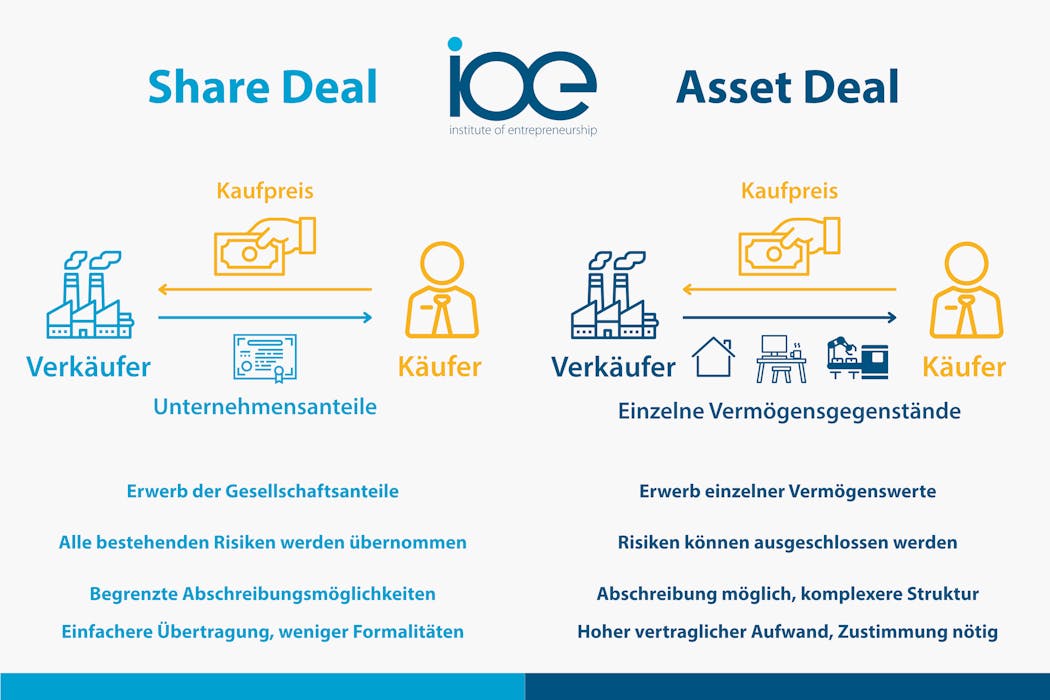
In an asset deal, individual assets and contracts of the business are acquired – such as machinery, inventory, and customer or supplier agreements. The buyer does not acquire the company itself, but rather specific business assets on a selective basis.
Advantages for the buyer:
- Risks such as legacy liabilities, legal disputes, or outstanding obligations can be excluded.
- Flexibility: Only the "good assets" are taken over.
- Acquired assets can often be depreciated for tax purposes.
Disadvantages:
- Complex contract structuring (each item must be transferred individually).
- Consent requirements from contractual partners (e.g. in lease or employment agreements).
- VAT-related risks depending on the specific structure.
In an asset deal, legal due diligence is particularly important – as described in the article on legal review in business acquisitions.
What is a Share Deal?
In a share deal, company shares (e.g. GmbH shares or stocks) are acquired. The buyer steps into the position of the previous shareholder and assumes all rights and obligations.
Advantages for the buyer:
- Seamless transition: All contracts, licences, and employees remain in place.
- Faster completion with reduced administrative effort.
Disadvantages:
- Buyer also assumes hidden risks (liability, legacy issues).
- Fewer tax planning options.
- The seller typically achieves more favourable tax outcomes, which can lead to higher asking prices.
Case Studies
- Asset Deal: A buyer wishes to acquire a specific production facility with machinery and customer contracts, without taking on the company's legacy liabilities.
- Share Deal: An investor purchases 100% of a GmbH because they want to acquire the entire company, including its brand, licences, and workforce.
Strategic Considerations for Buyers
The decision always depends on the overarching goals:
- As part of the deal structure, the combination of earn-outs or vendor loans is often a lever for mitigating risks in a share deal.
- The choice has a direct impact on the company valuation, as risks and tax implications influence the purchase price.
- The choice also determines the costs of the business acquisition – in particular through additional advisory fees, taxes, and financing expenses.
Conclusion
Whether an asset deal or a share deal is the more suitable option cannot be answered in general terms. Buyers often benefit from greater security with an asset deal, while sellers tend to prefer the share deal. In either case, the choice has a significant impact on risks, taxes, and deal structure. It is therefore advisable to follow a structured approach and work with experienced advisers – for comprehensive guidance, refer to the complete checklist for business acquisitions.