
Article
Business Model Innovation: The Underestimated Lever for Entrepreneurial Success
Innovative business models don't emerge by chance – they are the result of systematic innovation. Discover how companies use the Business Model Navigator to combine successful patterns, rethink their value creation, and build lasting competitive advantages.

1. What is Business Model Innovation (BMI)?
In a world shaped by technological disruption, evolving customer needs and global competition, simply improving existing products or services is no longer enough. Companies must also rethink and adapt their business models in order to remain successful in the long term.
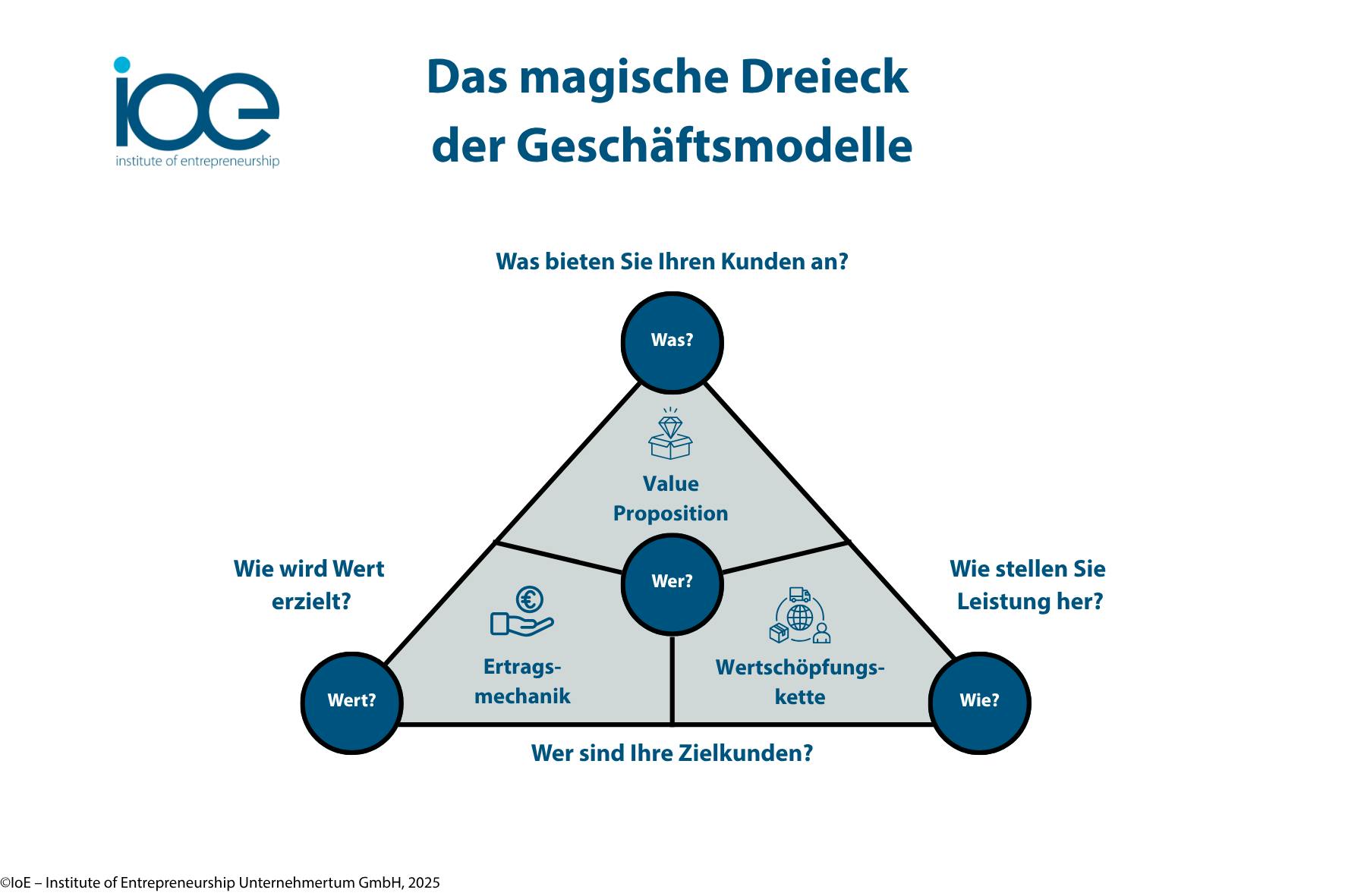
Business Model Innovation (BMI) describes the strategic process by which companies transform at least two of the four core dimensions of their business model:
- Who?: Who are the target customers, and how can you better address their needs?
- What?: What unique value do you create for your customers?
- How?: How do you design your processes and value chain to deliver this value efficiently?
- Value?: How do you generate revenue and ensure that your business model remains profitable?
BMI is more than just a trend – it is a decisive lever for holding your own in a dynamic market environment. Companies that ignore this approach risk being overtaken by agile competitors. Business Model Innovation does not merely change the product; it transforms the entire value creation logic. Find out how to map your business model visually and test hypotheses in our article on the Business Model Canvas.
2. The Business Model Navigator Method
The Business Model Navigator, developed by the BMI Lab at the University of St. Gallen, offers a scientifically grounded and practice-oriented method for systematically questioning and redesigning business models.
Key principles of the Business Model Navigator:
- Creative imitation rather than radical invention: many successful business models are based on adapting and recombining existing ideas.
- Systematic innovation process: The Business Model Navigator divides the process into four clearly defined phases: Initiation: Analysis of the current situation, identification of challenges and opportunities. Ideation: Development of new business model ideas through the application of proven patterns. Integration: Evaluation and selection of the best ideas, along with their alignment to the corporate strategy. Implementation: Execution of the innovation and embedding it within the organisation. This structured approach enables companies to manage the innovation process effectively whilst minimising risks.
3. The 55 Patterns of Successful Business Models – and What You Can Learn from Them
The Business Model Navigator identifies 55 universal patterns that recur across successful business models. These patterns offer a valuable source of inspiration for companies looking to rethink their business model.
Here are some examples:
- Add-on model: Additional revenue generated by selling premium options or supplementary services. A prime example is Ryanair, which offers low-cost base fares and monetises extras such as seat reservations or baggage fees.
- Freemium model: A basic offering is provided free of charge, while premium features come at a cost. Spotify has perfected this model and gained a global audience.
- Platform model: Companies such as Airbnb or Uber act as intermediaries between supply and demand, creating new markets through their platforms.
These patterns are not theoretical concepts, but proven success strategies that can be applied across various industries and company sizes.
The Business Model Navigator provides the methodological foundation for discovering and combining new patterns. You can find an overview of all 55 patterns in The 55 Business Models – Your Toolkit for Starting a Business.
4. Real-World Examples
Successful adaptations through business model innovation:
- Zalando: Originally launched as a straightforward online retailer, Zalando has continuously evolved its business model. Today, the company operates as a fashion and lifestyle platform, offering partner programmes access to its infrastructure and establishing a competitive advantage through innovative logistics solutions.
- IKEA: IKEA has demonstrated how to adapt to changing customer needs through the introduction of modular furniture and innovative services such as Click & Collect. At the same time, the company has strengthened its relevance among environmentally conscious consumers through sustainable initiatives.
- Ryanair: Ryanair's radical low-cost model has revolutionised the aviation industry. By focusing on cost efficiency and monetising ancillary services, the company has been able to gain market share while remaining profitable.
Businesses that failed due to stagnation:
- Otto, Quelle, Neckermann: these once-dominant mail-order giants missed the window to enter e-commerce. While Amazon and Zalando conquered the market, they clung to outdated business models and lost their relevance.
- Grundig: Once synonymous with German engineering excellence, Grundig failed to adapt to technological innovation and shifting market demands. International competitors took the lead.
These examples illustrate that standing still is not an option in a dynamic world. Companies that are unwilling to question their business model risk their very existence.
How companies like Spotify, Ryanair, or Nespresso have redefined their markets is illustrated in our case studies:
- Spotify – Freemium and Platform Economy
- Ryanair – add-on principle and cost leadership
- Airbnb – Peer-to-Peer and Platform Strategy
- Nespresso – Razor-and-Blade and Premium Positioning
5. Conclusion
Business Model Innovation is not merely a tool for adapting to change — it is a strategic lever for opening up new markets and securing competitive advantages. The Business Model Navigator provides a proven method for managing this transformation in a structured and effective way. Companies that rise to this challenge not only secure their future, but also lay the foundation for sustainable growth. For more articles on founding, validation, and growth, visit our overview page on business founding.
➡️ Further reading:
• Understanding and applying the Business Model Canvas
• The 55 Business Models – Your toolkit for starting a business
• Founding a Start-Up